

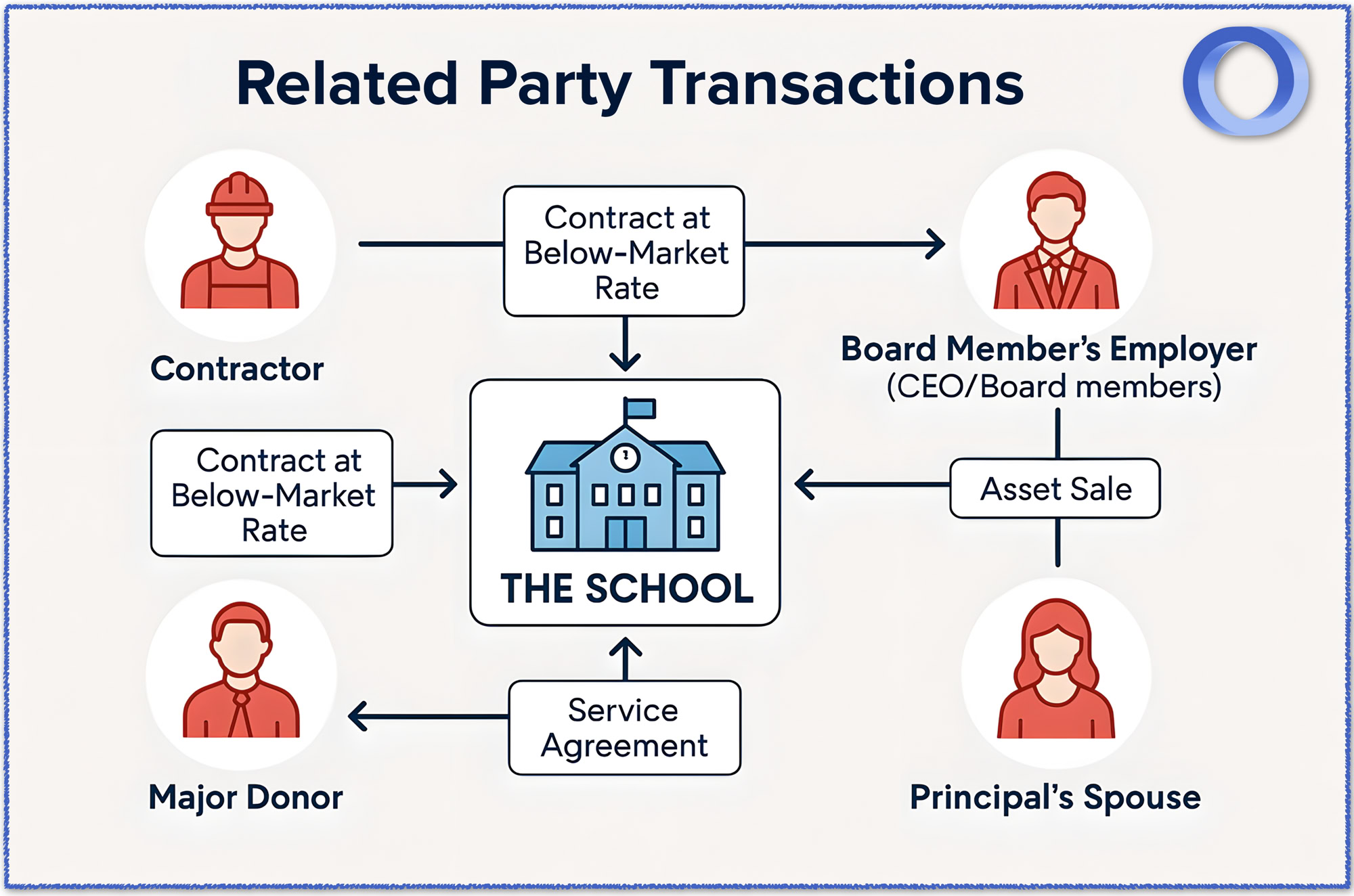
For school boards, related party transactions are agreements or arrangements between the school and individuals or organisations that have a close relationship with board members, senior managers, or staff. These transactions can include contracts for services, sales of property, or employment and other agreements involving family members or business associates. While not inherently unethical, related party transactions have to be treated sensitively and transparently because they pose a risk of perceived favouritism, reduced competition, loss of public trust and acceptance of sub-optimal arrangements that are not in the school’s best interests.
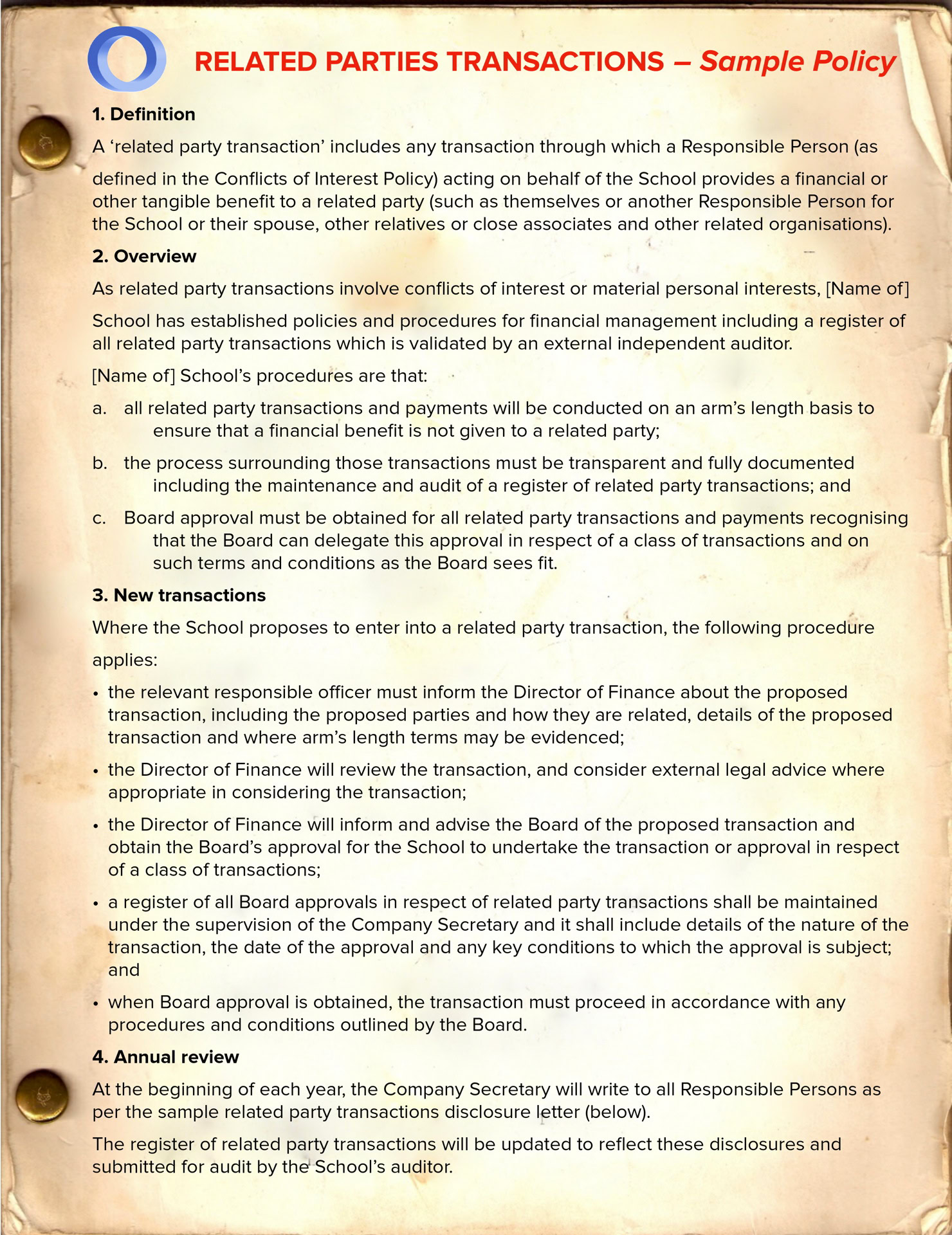
To manage related party transactions effectively, school boards must establish clear policies defining what constitutes a related party and the types of transactions that fall under scrutiny. A sample policy might look something like this:
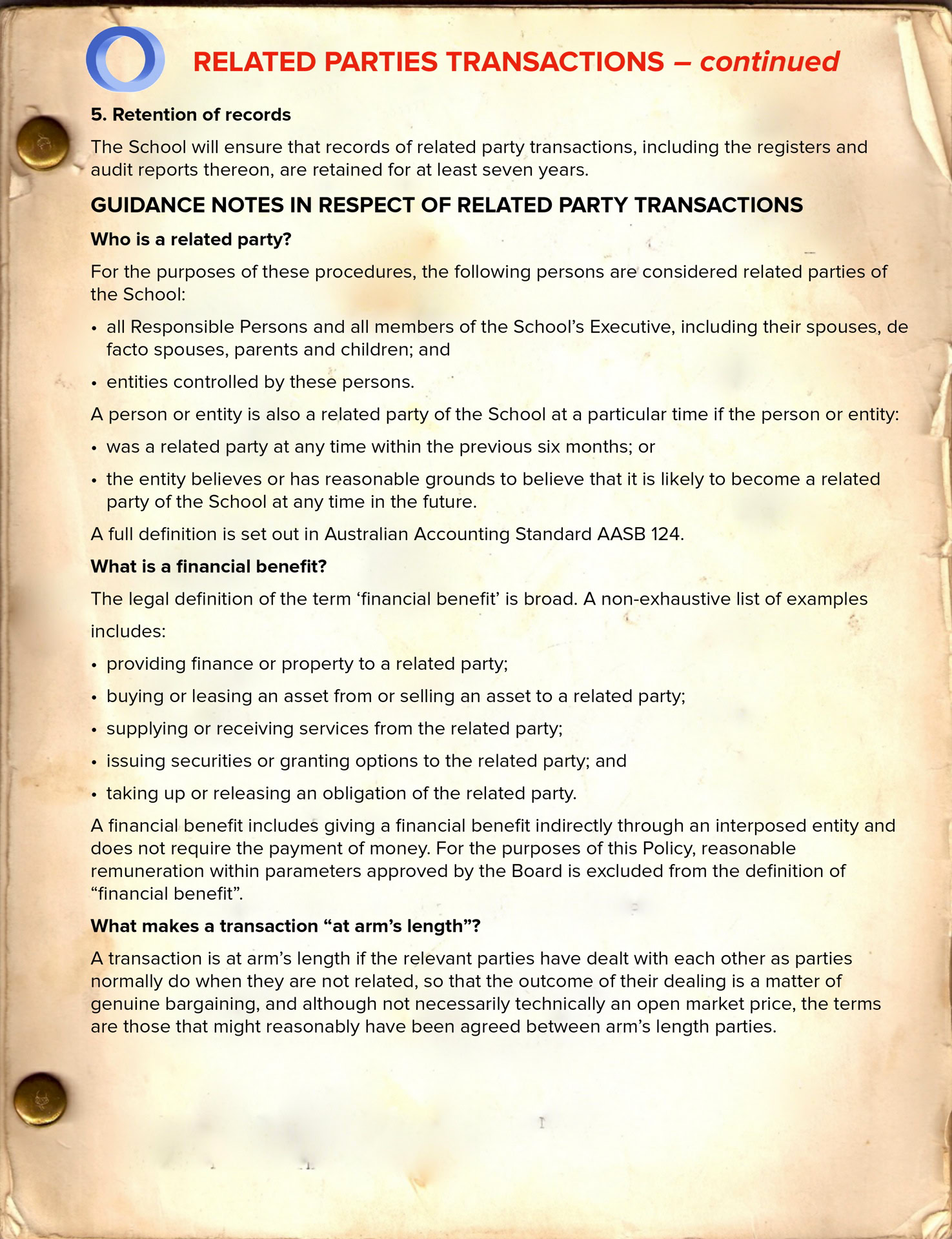
When school boards and senior managers take the initiative to identify potential transactions with related parties, they can implement safeguards such as pre-approval requirements, competitive bidding processes, and public disclosure of any related interests. Therefore, an annual declaration can be very helpful in identifying potential related party transactions. Optimal School Governance can provide sample declarations to school boards who require such support.
Related party transactions are a form of conflict of interest. A practical example of how a related party transaction could arise might be when a school board considers contracting a construction company for school renovations. If a board member’s sibling owned or had a significant share in one of the bidding companies, selecting that company would constitute a related party transaction. To ensure fairness, the board member must disclose this relationship and recuse themselves from the board’s decision-making process. Furthermore, all bids should be evaluated objectively using standardised criteria to avoid any appearance of impropriety, and complete records retained of the tendering process. A contract should only be awarded to a related party if the evidence is clear that the school’s best interests would be served by awarding the contract to the related party rather than to another bidder. In such cases, appropriate evidence would be something like the lowest price (or the best value), or demonstrable, data-based evidence that the quality of service provided by the related party is significantly better for the price than the other bidders have offered.
Regular audits and independent reviews of procurement processes also help school boards identify and manage related party transactions. These audits should include a review of vendor relationships, contracts, and the decision-making processes that led to their approval. School boards can engage external auditors to conduct these reviews, providing an unbiased perspective and helping reinforce public confidence in board members’ integrity.
Education and training for school board members and senior managers also plays a critical role in safeguarding against the perils of undeclared related party transactions. Training sessions can raise awareness about the legal and ethical implications of such transactions and reinforce the importance of transparency and accountability.
Ultimately, fostering a culture of ethical decision-making is essential. School board members should consistently communicate their primary obligation as being to serve the educational needs of students and the broader school community, not only now but into the future, and they must demonstrate this unwavering commitment through the decisions that they make.
- Dr Stephen Codrington
We offer support for school leaders and board members in many areas, including workshops on conflicts of interest and related parties transactions.
Further information on this and many other facets of best practice in school leadership and governance is provided in the books “Optimal School Governance", and “DARING INSIGHTS into School Leadership and Board Governance”, which can be ordered directly through Pronins.
You may also be interested in previous articles which are archived at https://optimalschool.com/articles.html. You can subscribe to receive future articles by e-mail using the red button below.